6. 11. 2025


IMIC scientists map the global distribution of soil fungi that help store carbon. Climate change is threatening them. A large-scale study was published in the journal New Phytologist.
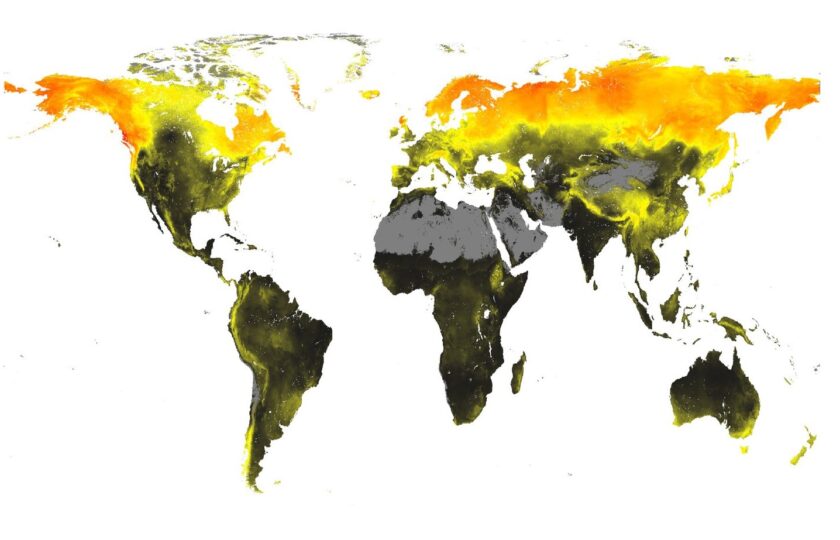
A large-scale international study led by researchers from the Institute of Microbiology of the Czech Academy of Sciences (IMIC CAS) and Charles University has, for the first time, mapped the global distribution of so-called ericoid mycorrhizal fungi. The study reveals that these fungi are most abundant in tundra ecosystems and the northern reaches of boreal forests, and that climate change could reduce their occurrence across more than one-third of their current range.
One of the planet’s most important symbioses takes place beneath our feet. Plant roots connect with fungal filaments to form what is known as mycorrhiza, a mutually beneficial partnership through which plants gain improved access to soil nutrients, while fungi receive carbon captured by plants from atmospheric CO₂ through photosynthesis. One type of this symbiosis is ericoid mycorrhiza, which is formed primarily by plants in the heath family (Ericaceae), including blueberries, heather, and rhododendrons. Ericoid fungi differ substantially from other mycorrhizal fungi. Although they often form symbiotic relationships with plants, they are not strictly dependent on them and can also obtain nutrients from non-living organic matter.
While fungi forming mycorrhizae with trees have been relatively well studied, ericoid fungi remained largely unexplored until recently. That is now changing thanks to a study published in the journal New Phytologist. The research was conducted by a team led by Petr Kohout and Iñaki Odriozola from the IMIC CAS, in collaboration with several institutions, including the U.S.-based nonprofit organization SPUN (Society for the Protection of Underground Networks) and Charles University in Prague.
The World’s First Global Atlas of Ericoid Mycorrhizal Fungi
The team used the open-access GlobalFungi database, developed by researchers at the IMIC CAS, which compiles fungal DNA data from environmental samples collected worldwide. Scientists analyzed data from 33,466 soil samples containing ericoid mycorrhizal fungi, collected from more than 14,000 locations across the globe. Using statistical models, they produced the first-ever global map of the distribution and diversity of these organisms.
The results confirm a longstanding hypothesis that the three major groups of mycorrhizal fungi, arbuscular, ectomycorrhizal, and ericoid, have distinct latitudinal biodiversity belts. “We now have a remarkably clear pattern of mycorrhizal fungal diversity across three zones,” says Petr Kohout, soil biologist and head of the Laboratory of Microbial Ecology and Biogeography at the IMIC CAS, and continues: “The tropics and subtropics for arbuscular mycorrhizal fungi, temperate and boreal regions for ectomycorrhizal fungi, and the boreal zone and tundra for ericoid fungi.”
Arbuscular fungi dominate tropical regions, ectomycorrhizal fungi reach their highest diversity in temperate and boreal forests, while ericoid fungi achieve peak species richness in tundra ecosystems and at the northern edges of boreal forests, areas where many other groups of organisms actually lose diversity. This represents a rare example of a reverse latitudinal biodiversity gradient: whereas the number of plant, bird, and mammal species generally declines with increasing latitude, these fungi and certain other microorganisms become more diverse.
“The occurrence of ericoid fungi had been suggested before, but only now, thanks to the availability of large databases and advanced modelling and computational tools, have we been able to confirm it,” says lead author Iñaki Odriozola of the IMIC CAS.
Allies in Soil Carbon Storage
Ericoid fungi play a crucial role in storing carbon in soils and face potentially serious threats from climate change.
Because the Arctic, northern Europe, and mountain regions are warming faster than most places on Earth, researchers are concerned that the important role these fungi play in keeping carbon out of the atmosphere may change dramatically before we fully understand it, and before their contribution is incorporated into climate models. The study indicates that under a scenario of moderate to high greenhouse gas emissions, ericoid mycorrhizal fungi could decline across nearly 40% of their current distribution by 2070.
“This is another complication that people really need to take into account,” says co-author Michael Van Nuland, an ecologist at SPUN. “It could have quite dramatic implications for our estimates of how much carbon may be lost as the climate warms.”
A Hidden Warning
The study also revealed another important relationship: the abundance of ericoid fungi in soil correlates with the concentration of organic carbon in surface soil layers. When these fungi die, they leave behind resilient, melanin-rich biomass that decomposes very slowly. Soil has enormous potential to act as a carbon reservoir, but if mismanaged, it can also release large amounts of carbon back into the atmosphere.
At the same time, these regions are warming rapidly, disrupting a delicate ecological balance. Higher temperatures may increase soil fertility, facilitating the spread of ectomycorrhizal and arbuscular mycorrhizal fungi into ecosystems currently dominated by ericoid fungi. “Once other mycorrhizal types begin to enter these ecosystems, substantial shifts in carbon cycling occur,” explains Van Nuland.
Ericoid fungi may hold one of the keys to understanding why the Arctic and boreal regions contain some of the largest carbon stores on Earth. Future research should determine whether these fungi directly contribute to carbon sequestration in soils or whether their association with carbon storage is an indirect consequence of other ecological processes.
Tracking Ericoid Mycorrhizal Fungi: Why It Matters
This study provides the first comprehensive picture of the global distribution of ericoid mycorrhizal fungi. It demonstrates that these inconspicuous organisms are important players in soil carbon storage and that their future is closely linked to climate change. Furthermore, the authors show that climate change is projected to reduce the abundance of ericoid mycorrhizal fungi across approximately 40% of the land area within their current global distribution, with potentially significant consequences for ecosystem processes related to soil carbon cycling.
PUBLICATION
Odriozola, I., Větrovský, T., Barbi, F., Machac, A., Dobbler, P.T., Turcu, C., Van Nuland, M.E., Qin, C., Kiers, T., Soudzilovskaia, N.A., Baldrian, P. and Kohout, P. (2026), Global distribution and biogeography of ericoid mycorrhizal fungi. New Phytol, 251: 2135-2151. https://doi.org/10.1111/nph.71334
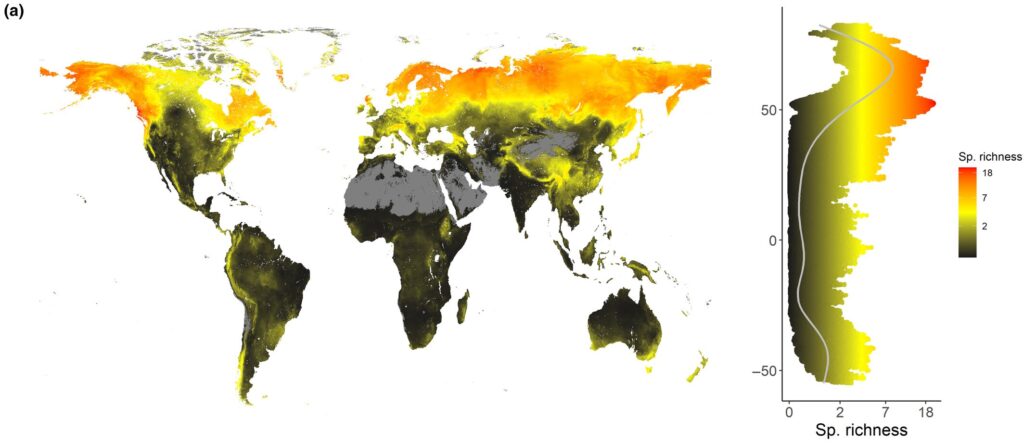
Figure: The map shows high species diversity of ericoid mycorrhizal fungi in regions such as the Arctic tundra, Scottish peatlands, and mountain summits, including the Andes (red indicates the highest diversity values). Global distribution and biogeography of ericoid mycorrhizal fungi.


Please be advised that the IMIC CAS is changing its email addresses.
The new email address follows this format: “”
The original “@biomed.cas.cz” address on the website will be updated shortly.